

How to Recharge Your Car’s A/C System
Over time, refrigerant levels in your vehicle’s air conditioning (A/C) system can decrease, leading to warm airflow, slow cabin cooling, and inconsistent A/C performance.
Don’t get stuck driving in the summer heat without a working A/C system. If your A/C is running, but not blowing cold air, a DIY A/C recharge kit may help restore cooling performance. Follow our step-by-step guide to recharge your vehicle’s air conditioning system using the B’laster all-in-one R-1234yf A/C Refrigerant Recharge Kit.
What is a refrigerant recharge kit?
A vehicle A/C recharge kit is an all-in-one solution designed to simplify the A/C recharge process. For example, the B’laster R-1234fy A/C Refrigerant Recharge Kit includes:
- UV dye for leak detection under UV light
- Smart Clip® Technology, the air vent clip turns dark blue when the system reaches the recommended fill level
- An easy-to-read pressure gauge for reference only (check the Smart Clip® when the gauge reaches the blue zone, between 25 and 75 PSI)
- A reusable recharge hose assembly
- A non-clogging, polymer-free New Safe-Seal™ formula designed to help seal micro abrasions in rubber and metal components.
All-in-one kits like the B’laster R-1234yf A/C Refrigerant Recharge Kit help reduce guesswork and are ideal for DIYers or anyone recharging an A/C system for the first time.
A Step-by-Step Guide to Recharging a Vehicle’s A/C System Using the B’laster R-1234yf Refrigerant Recharge Kit
The Shop Talk - B'laster A/C Refrigerant Recharge Kit video is for educational and reference purposes only and does not replace professional advice, training, or certification. Use the information at your own discretion.
- Pop the hood of your vehicle and find the white or yellow label under the hood. Confirm which type of refrigerant your vehicle uses and ensure you have the correct refrigerant recharge kit.

- For an accurate reading on your A/C pressure gauge, it is recommended to recharge your vehicle’s A/C system when the ambient temperature is above 18°C.
- Put on a pair of safety glasses and gloves. Refrigerant can be harmful if it comes into contact with skin or eyes.

- Attach the Smart Clip® to a dash vent.
- Start your vehicle’s engine.
- Set the A/C to maximum cold.

- Set your fan to HIGH and let the system run for a few minutes.
- Locate the low-pressure service port (typically found on the larger diameter line with the cap often marked with an “L”) and remove the cap.

- Attach the quick-connect coupler to the low-pressure service port. Only use the low-pressure service port when performing an A/C recharge. Once connected, the unit's gauge will display your system’s pressure.

- Before adding refrigerant, check the markings on the gauge. If your gauge read low pressure (Add Refrigerant white zone), proceed with recharging the system. If the gauge shows the pressure is within the normal or high ranges (blue or red zones), do not recharge the system.
- To proceed with recharging the system, squeeze the unit's trigger, rotating the can between the 12 and 3 o’clock positions for approximately 10 seconds. Continue to add the refrigerant in short bursts, pausing between each to let the pressure stabilize.

- Monitor the gauge and Smart Clip and stop adding refrigerant when the gauge reaches the recommended zone, and the Smart Clip® turns blue. Overfilling can damage your system.
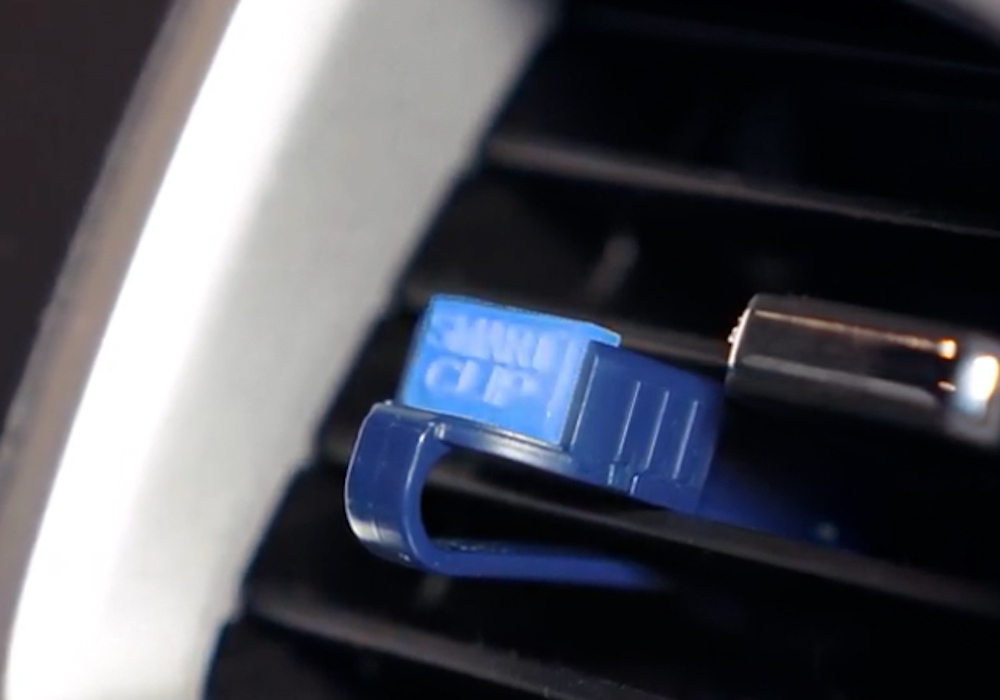
- Remove the hose and replace the low-pressure service port cap. Continue to let the A/C run for a few minutes. You should notice cold or colder air blowing from the vents.
FAQs
How do I know if my vehicle’s A/C needs a recharge?
If your vehicle’s A/C is taking longer to cool or cycling on and off frequently, it may be low on refrigerant and could benefit from a recharge. Recharge kits top up refrigerant. They do not repair systems that have completely lost their charge. If your A/C still blows warm after recharging, won't hold a charge, or the compressor doesn't engage, your vehicle may have a refrigerant leak, air conditioning compressor failure, or electrical issue, and it may be time to visit an automotive repair shop.
Can I recharge my vehicle's A/C myself?
Yes, you can recharge your vehicle's A/C system using a DIY-friendly recharge kit by carefully following the product instructions.
Will I need special tools to recharge my vehicle's A/C?
The B’laster R-1234yf A/C Refrigerant Kit includes all the equipment needed (minus personal protective equipment, e.g., gloves and safety glasses) to complete an A/C recharge.
How long does it take to recharge a vehicle's A/C system?
Set aside approximately 10–30 minutes to recharge your vehicle. Time may vary depending on the vehicle’s make, model, and refrigerant level.
What happens if I overcharge my vehicle's A/C?
Overcharging your A/C system can potentially damage system components. Remember to monitor the gauge when charging your vehicle to prevent overcharging.
What type of refrigerant does my car use?
Most vehicles use one of the two main types of refrigerant:
- R-134a, commonly used in vehicles from 2014 or earlier
- R-1234yf, commonly used in vehicles from 2015 and newer, including many hybrids
Is the B’laster R-1234fy A/C Refrigerant Recharge Kit safe to use on hybrid vehicles?
Yes, the B'laster R-1234fy A/C Refrigerant Recharge Kit is safe to use on compatible hybrid vehicles that specify R-1234yf refrigerant.
How often should I recharge my vehicle's A/C?
If you find your vehicle’s A/C system needs frequent recharging, bring it in to an automotive repair shop for professional service.
Do I need a gauge to recharge my vehicle’s A/C?
The B’laster R-1234yf A/C Refrigerant Recharge Kit comes equipped with a pressure gauge.
Is it safe to drive your vehicle when your A/C is low on refrigerant?
Yes, but operating an A/C system that is low on refrigerant for extended periods may increase wear on system components.
Will recharging the A/C system fix all cooling problems?
No, recharging will not fix mechanical or electrical A/C issues.